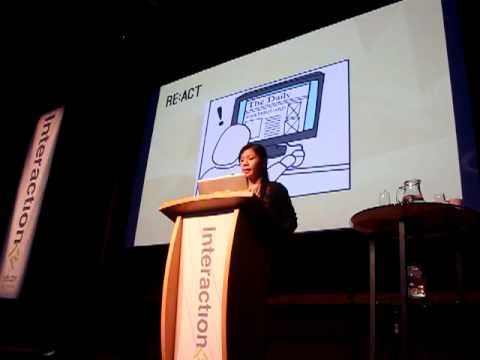
We’ve got video of the four finalists giving their presentations. You can see their slide decks here.
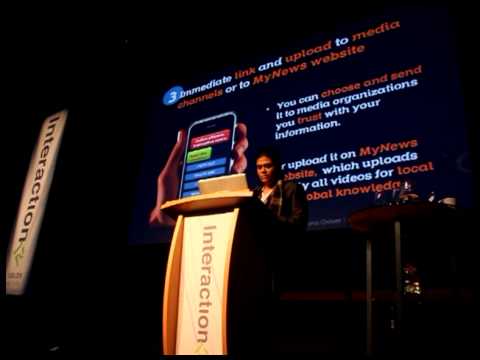
Grand Prize: Priscilla Mok
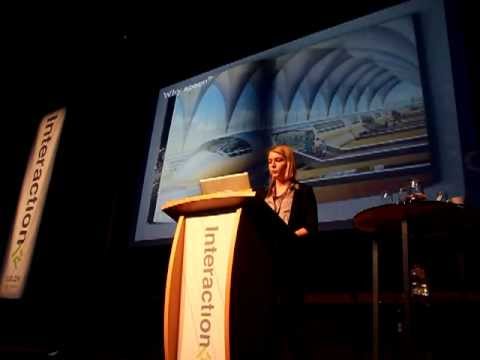
1st Runner Up: Diksha Grover
2nd Runner-Up: Siri Johansson
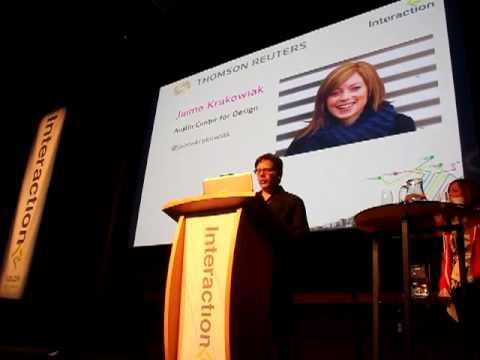
Honourable Mention: Jaime Krakowiak
We’ve got video of the four finalists giving their presentations. You can see their slide decks here.
Grand Prize: Priscilla Mok
1st Runner Up: Diksha Grover
2nd Runner-Up: Siri Johansson
Honourable Mention: Jaime Krakowiak
And what did they win? A dazzling array of prizes!
Meanwhile, our winners have taken on @ixdanewsfutures to continue the discussion. Check it out!
More pictures from my trip to Dublin for IxDA Student Design Challenge. Also see Part 1.

There is a chain called TJ Hughes in parts of Europe, so they swapped out the J for a K in order to prevent confusion.

KitKat deathmatch?

Most charming packaging, ever!

Dublin doors.


The classic, interpreted two ways.

Viking marketing.

Differentiation?

Damn right it hurts.


Local retail aesthetics.

Treasures in the trash.
It’s a crazy busy week for us, focusing on just a couple of big things
Whew! Our wonderful judges have sifted through the 56 entries! We heard from a number of judges how impressed they were overall with the quality of the entries and the creativity and passion that the group overall had to offer. Of course, this makes the selection process a difficult one. We’ve thought to ourselves “Well, what if we could take them ALL!!!” but of course, we can’t.
We managed to find four wonderful and inspiring entries among all the bounty of goodness we received from around the world. Our winners are (in no particular order)
Here are each of their videos
Diksha
Siri
Jaime
Priscilla
Thanks to our judges for their wonderful work and for all the entrants who contributed such a great set of videos. Our winners will now be working between now and Dublin where we’ll have a two-day masterclass and design activity before the conference. We are now exceptionally enthusiastic about the upcoming experience in Dublin.

Business strategist Nilofer Merchant presented her branded “MurderBoarding” process at the IxDA SF monthly meeting last night.
While brainstorming generates lots of ideas, you still have to discern the right choices to win. AND you have to get a group of people to believe that IT is the right solution.
The opposite of whiteboarding, the MurderBoarding™ decision process ensures teams creatively generate many potential options before “killing off” options one-by-one until there is single best solution for a specific organization and situation.
Merchant is certainly right that companies often have as much difficulty dealing with the aftermath of idea generation – What do we do now? – as the divergent exploration itself. There’s no question that for many organizations, moving forward from idea generation in a grounded way is a challenge, and it’s great that Merchant has structured a process for establishing decision-making criteria and prioritizing ideas for development. We’ve had to create this type of process too, and have increasingly been working with our clients from research through ideation to evaluating and prioritizing ideation results through the lens of what we’ve helped them learn about their customers.
Merchant’s book, The New How, just came out a month ago, and it’s quite possible that her presentation was intended to serve as a teaser for the book, rather than a standalone piece, but at the conclusion of the talk I felt like I was still waiting for it to start – for me, there was a bit of the “no there, there” feeling to it.
When a process comes along with a provocative new name like MurderBoarding, it can be both affirming and disappointing to find out it’s more or less in line with what you’ve already been doing.
It’s a bit like looking at the ingredients list on your sports drink and realizing that “Electrolytes” are just salt.
If you’d like to know more about our approach to generating ideas (if not murdering them), check out Steve’s BayCHI presentation, Well We Did All This Research…now what?, or catch it live at the Interaction10 conference next month in Savannah.
I’ll be leading my Well, we did all this research… now what? workshop at Interaction10 in Savannah, GA, in February. (Check out audio and slides from an abbreviated form the workshop here).
If you’re going to sign up before the end of the year, you can use my discount code: IxD10Special and save $50 off the conference registration.
One of the most persistent factors limiting the impact of design research is that research projects often stop with a cataloging findings and implications rather than generating opportunities that directly enable the findings. As designers increasingly become involved in using contextual research to inform their design work, they may find themselves holding onto a trove of raw data but with little awareness of how to turn it into design.
Participants in this workshop (a sell-out at last year’s conference), collaborating in teams, will learn an effective framework for synthesizing raw data (to be gathered before and during the workshop) into insights, and then creatively using those insights to develop a range of business concepts that respond to those insights. While the framework includes a step to identify key filters that will ultimately prioritize across all generated concepts, the emphasis in this workshop will be to think as broadly as possible during ideation, truly strengthening the creative link between “data” and “action.” By the end of the workshop, participants will have developed a range of high-level concepts that respond to a business problem and integrate a fresh, contextual understanding of that problem.

Urban Camouflage, New York, June 2004
I’m off to New York next week for a handful of speaking engagements. If you’re going to be at any of them, please let me know!
(PPT here)
(slides here)
It looks to be a busy time between now and the end of the year, with a lot of exciting opportunities. Some details still TBD; I’ll update with links when we get ‘em. Meanwhile, if you’re going to be at any of these presentations, please let me know!

Sketch for curved shelf ©2007 Dan Soltzberg
There’s a testament to the power of openness as a spur to creative participation nestled in Scott Brown’s piece on early fan fiction in this month’s Wired.
Brown writes about the works Sir Arthur Conan Doyle’s more avid readers created around his Sherlock Holmes novels, and how what were really continuity errors provided these folks with points of entry:
Sir Arthur, God bless him, didn’t write with an eye to what today’s nerd would call “continuity.” Crafting Holmes stories bored him, and he frequently lost track of details like the exact location of Watson’s Afghan war wound (was it the shoulder or the leg?) and the precise status of Mrs. Watson. But Sir Arthur’s table scraps, his inconsistencies and random allusions, made for a fan feast. From a throwaway line—a hilariously oblique reference such as “the giant rat of Sumatra, a story for which the world is not yet prepared”—scores of amateur yarns have been spun.
Conan Doyle’s omissions and errors left space for others to contribute. Less-than-fully-speced inputs–raw sketches, concept directions, overarching themes–can often leave more space for creative participation than a finely honed departure point.
Of course it depends on where in a development process one is and what the objectives are. (Sing, “a time to diverge, a time to converge” to the tune of The Byrds’ “Turn Turn Turn”).
In semi-related news, San Francisco IxDA will be exploring the use of prototypes at their May 26th event.
Related Posts:
Giving Away Time, and Moving with a Magic Thing (Quickies)
Human Behavior
Trying to find out things we didn’t even know to ask about